Educational Insights
The Glass Ceiling of "Good Vibes": Why Indian Shoutcasting is Stuck in Beta
Breaking the "Bro-Caster" cycle: Why India’s shoutcasting scene is finally trading in-group contacts for certified professional standards.
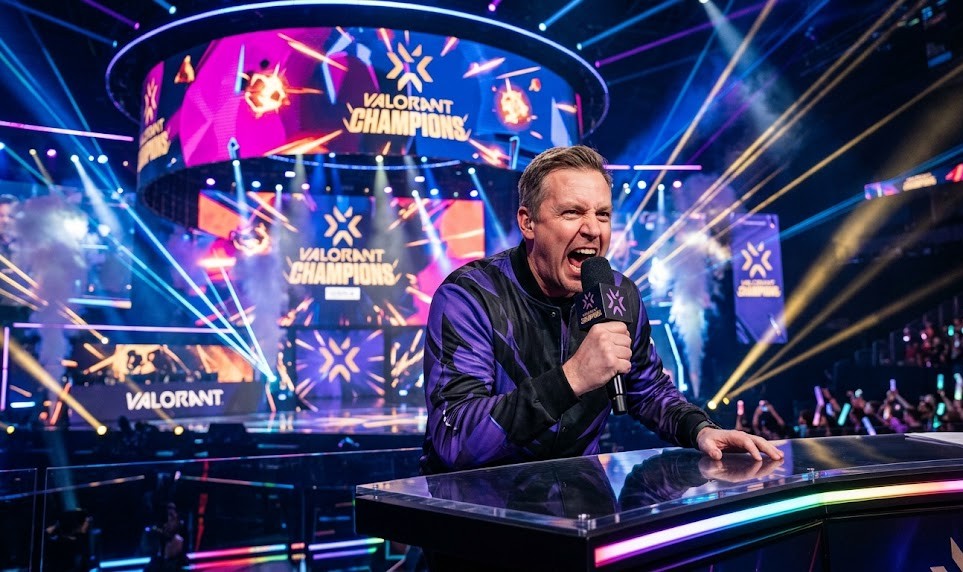
For over a decade, India’s esports scene has exploded. We’ve seen prize pools jump from meager vouchers to multi-crore mandates, and players go from "wasting time" to being national icons. Yet, if you look at the broadcast booth, the evolution of shoutcasting as a career has remained strangely stagnant.
While the players turned professional, the commentary often stayed in the realm of the "enthusiastic amateur." Here is why shoutcasting in India hasn’t truly evolved—and how the old guard of "contacts and pedigree" is finally being challenged.
1. The "Bro-Caster" Trap
In the early days of Indian esports, shoutcasting wasn't a job you applied for; it was a seat you were given because you were friends with the tournament organizer or the top-tier players.
The Contact Barrier: Historically, getting on a premier broadcast required being "in the circle." If you didn't hang out in the right Discord servers or WhatsApp groups, your talent didn't matter.
Skill vs. Vibes: This led to a culture where "hype" was prioritized over analytical depth. We became accustomed to loud shouting and catchphrases rather than the tactical breakdowns seen in global circuits like the LEC or VCT.
2. The Expensive Illusion of "Broadcasting Education"
For years, the narrative was that if you wanted to be a professional voice, you needed a traditional Mass Media degree or an expensive private course in Radio Jockeying.
The Pedigree Tax: These institutions charged lakhs of rupees to teach students how to read news teleprompters—a skill that has almost zero overlap with the high-octane, data-driven world of live gaming.
The Knowledge Gap: Traditional education failed to recognize that a shoutcaster needs to be part-comedian, part-analyst, and part-database. You can't learn frame data or rotational strategy in a journalism lecture hall.
3. Missing: The "Scouting Standard"
Unlike players who have rank ladders and scrims to prove their worth, shoutcasters never had a clear path to the top.
The "Twitch Clip" Problem: Aspiring casters used to rely on sending random clips to organizers, hoping someone would click the link. There was no certification, no vetting, and no standard for what "professional" actually looked like.
The Stagnant Salary: Because it wasn't seen as a specialized trade, pay scales for casters remained volatile. Without a professional framework, it remained a "side hustle" rather than a sustainable 20-year career.
Changing the Narrative: The Professionalization of Passion
The era of relying on who you know is ending. As the Orange Economy takes center stage in India, we are seeing a shift toward Certified Talent.
We are finally moving away from "Twitch Clips" and moving toward The Scouting Standard. The future of shoutcasting isn't about who you know in the industry; it’s about having a vetted portfolio, a deep understanding of the game’s "soul," and the professional discipline to treat the mic like a workplace, not a playground.
The bottom line: Shoutcasting is no longer just about filling silence with noise. It’s about bridging the gap between high-level play and the audience’s emotions. It’s time we started treating it like the specialized craft it is.
Do you think the current crop of Indian casters is ready for a global stage, or are we still too focused on "hype" over "substance"?
Related Reading
Continue down this track.
 Educational Insights
India Has the World's Largest Gaming Generation. So Why Are We Still Losing Our Best Talent?
Poor grassroots infrastructure and no structured career support — India is losing its best esports talent to accident and attrition.
 Educational Insights
The Scouting Standard: Why We’re Trading "Twitch Clips" for Certified Talent
Move beyond the "viral moment" and discover how Perforange replaces fleeting highlight reels with data-driven certifications that prove professional readiness.
 Founder's Journal
From Stadium to Arena: The Digital Sports Era and the Future of Human Capability
Expanding the boundaries of human potential, our platform bridges the steep learning curve of digital sports by transforming raw gameplay and comms into automated post-game coaching and squad accountability.