Parent Zone
The Gaming Paradox: Bridging the Gap Between Family Dynamics and the Future of Education
Explore how the intentional integration of gaming is redefining modern education and unlocking high-value career paths for the next generation
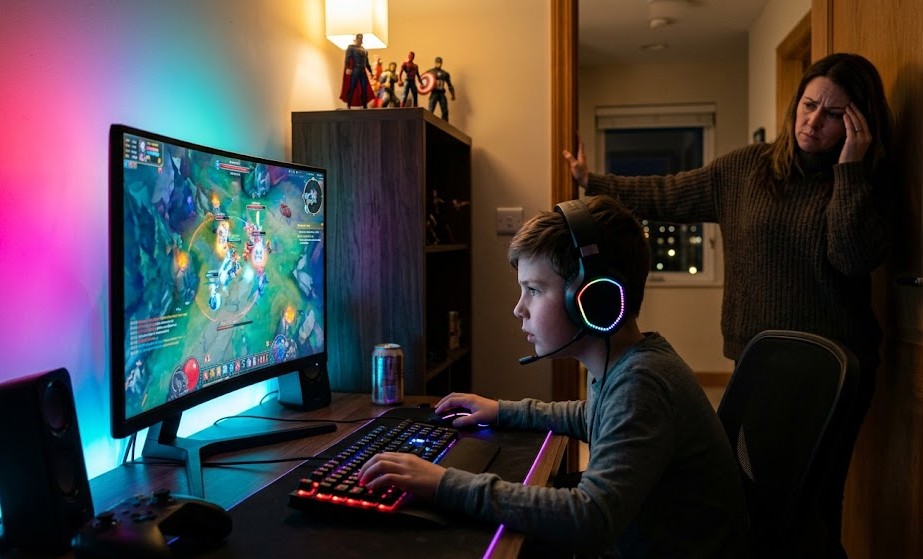
As we move through 2026, the conversation around gaming has fundamentally shifted. It is no longer a question of "to play or not to play". Instead, for startup founders, educators, and parents alike, the challenge is understanding how this massive industry redefines cognitive development, family boundaries, and the professional horizon.
The Midnight Marathon: Addressing Parental Anxiety
The "late-night gaming" session remains the primary friction point in modern households. It isn't just about the hours lost; it’s about the physiological and emotional impact on developing minds.
Physiological Impact: Exposure to blue light and high-intensity competition late at night can disrupt melatonin production.
Emotional Arousal: These sessions can leave the brain in a state of "high arousal" long after the console is turned off, making sleep quality poor.
The Perforange Workaround
Rather than adopting a policy of pure restriction—which often leads to friction—we advocate for Autonomy-Supportive Parenting. This involves:
Biological Literacy: Explaining the "why" behind sleep cycles so children understand the biological cost of a late session.
Digital Sunsets: Moving high-intensity competitive gaming to earlier hours, reserving the hour before bed for creative or low-adrenaline play.
"Gaming is no longer the enemy of the classroom; it is becoming the architecture of it."
Revolutionizing the Education Sector
The education sector is currently undergoing a "gamified" transformation. We are seeing a surge in multimodal teaching where quest-based rewards and real-time leaderboards are turning static subjects into interactive experiences. This isn’t just for engagement; it builds essential soft skills like teamwork, strategic planning, and rapid problem-solving.
The Careers We Are Missing Out On
The most significant missed opportunity lies in our perception of gaming as "just a hobby". By 2026, the professional landscape has expanded far beyond professional esports. Careers currently in high demand include:
In-Engine Architects: Designing digital twins for urban planning using tools like Unreal Engine.
Gamification Consultants: Applying game mechanics to healthcare and sustainability sectors to drive real-world behavioral changes.
Virtual Economy Managers: Managing the complex marketplaces within metaverses and gaming ecosystems.
Final Thoughts
At Perforange, we believe that the future of gaming isn't about more screen time—it's about intentional integration. If we only look for addiction indicators, we will miss the career catalysts hidden in plain sight. It is time to view gaming as a foundational literacy for the next generation.
How is your school or family navigating the gaming landscape this year? Share your thoughts in the comments below!
References
Geudens, M. (2026). Rethinking gaming disorder prevention: A socio-ecological model based on practitioner insights. PMC.
Lieberoth, A., & Fiskaali, A. (2021). Can worried parents predict effects of video games on their children? A case-control study of cognitive abilities, addiction indicators and wellbeing. Frontiers in Psychology, 11.
Cited by: 41
Pinzón-Salazar, S. (2026). Integrating gamification and artificial intelligence in sustainability education: A conceptual framework toward the 2030 Agenda. Frontiers in Education.
Wachholz, F. (2026). Motives of children for digital gaming and physical activity and their parents' perceptions: Cross-sectional matched-pair study. JMIR Pediatrics and Parent Care.
Cited by: 2
Yang, J. (2026). The impact of entertainment screen time on sleep quality in Chinese and British adolescents: A moderated mediation model. Frontiers in Psychology.
Zhang, J. (2026). Gamified physical education and cognitive performance among Chinese secondary school students: Cross-sectional moderation mediation study. JMIR Serious Games.
Related Reading
Continue down this track.
 Parent Zone
The Biological Clock Nobody Talks About — Why Your Child’s School Years Are Their Esports Peak
While Indian students wait for graduation, their global peers are winning championships; science says 22 is already too late for esports.
 Parent Zone
Your Child Isn't Less Intelligent. The School Just Isn't Measuring What They're Good At.
The report card wasn't wrong about your child. It was just measuring the wrong things.
 Founder's Journal
From Stadium to Arena: The Digital Sports Era and the Future of Human Capability
Expanding the boundaries of human potential, our platform bridges the steep learning curve of digital sports by transforming raw gameplay and comms into automated post-game coaching and squad accountability.